

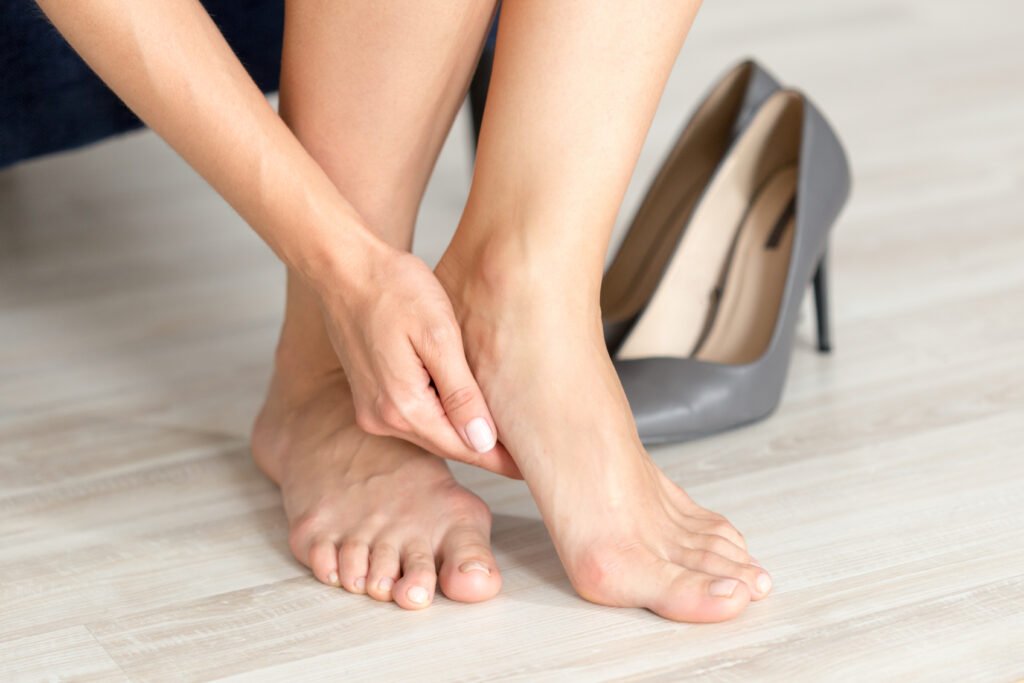
Healthy feet are the foundation of pain-free movement, balance, posture, and an active lifestyle. Whether you walk, exercise, stand for long hours, or play sports, your feet absorb pressure and support your entire body every single day.
But when foot mechanics become disturbed, it can lead to heel pain, arch discomfort, walking difficulty, and even problems in the knees, hips, or lower back.
Many people experience these symptoms but often confuse conditions like flat foot, plantar fasciitis, and calcaneal spur because they can feel very similar. However, these are different conditions with different causes, structures involved, and treatment approaches.
At PhysioVeda Medical Centre, we focus on identifying the real root cause of foot pain through detailed assessment, posture analysis, and personalized physiotherapy treatment for long-term recovery.
Why Understanding Foot Structure Is Important
The foot is made up of:
- Bones
- Ligaments
- Tendons
- Muscles
- Nerves
- Arches that support body weight
The arch of the foot works like a natural shock absorber.
When the muscles, ligaments, fascia, or bones become weak, tight, inflamed, or misaligned, it can lead to:
- Heel pain
- Arch pain
- Walking difficulty
- Knee or back pain
- Poor posture and balance problems
That is why proper diagnosis is extremely important.
What Is Flat Foot?
Flat foot (Pes Planus) is a condition where the arch of the foot collapses or becomes very low.
Instead of having a visible curve in the foot arch, the entire sole touches or nearly touches the ground.
Types of Flat Foot
- Congenital Flat Foot
Present since childhood or birth.
It may occur because:
- Foot arch does not develop properly
- Ligaments are naturally loose
- Genetic or developmental conditions
Some children improve naturally, while others may continue having flat feet into adulthood.
- Adult Acquired Flat Foot
Develops later in life due to:
- Muscle weakness
- Tendon dysfunction
- Obesity
- Aging
- Long standing hours
- Injury
- Poor footwear
This is very common among adults in Dubai because of prolonged standing, obesity, and sedentary lifestyles.
Symptoms of Flat Foot
- Foot fatigue
- Arch pain
- Heel pain
- Difficulty standing long hours
- Ankle instability
- Knee or back pain
- Shoes wearing unevenly
What Is Plantar Fasciitis?
Plantar fasciitis is inflammation or irritation of the plantar fascia, a thick band of tissue under the foot that connects the heel bone to the toes.
The plantar fascia supports the foot arch and absorbs stress during walking.
When excessive stress occurs, tiny micro-tears develop leading to pain and inflammation.
Symptoms of Plantar Fasciitis
- Sharp heel pain
- Pain during first steps in the morning
- Pain after prolonged sitting
- Tightness in calf muscles
- Pain after long walking or standing
This is one of the most common causes of heel pain treatment in Dubai.
What Is Calcaneal Spur (Heel Spur)?
A calcaneal spur or heel spur is a bony growth that develops under the heel bone (calcaneus).
It usually forms due to long-term stress and pulling of the plantar fascia on the heel bone.
Important Point:
A heel spur itself may not always be painful.
Many people have spurs without symptoms.
Pain usually occurs because of:
- Plantar fascia irritation
- Inflammation
- Pressure overload
- Associated plantar fasciitis
Symptoms of Calcaneal Spur
- Deep heel pain
- Pain while standing
- Pain during walking
- Tenderness under heel
- Chronic foot discomfort
Flat Foot vs Plantar Fasciitis vs Calcaneal Spur
Condition | Main Problem | Structure Involved | Common Pain Area |
Flat Foot | Collapsed arch | Muscles, ligaments, tendons | Arch, ankle, whole foot |
Plantar Fasciitis | Fascia inflammation | Plantar fascia | Heel and arch |
Calcaneal Spur | Bone growth | Heel bone | Bottom of heel |
How These Conditions Are Connected
These conditions are often related.
For example:
- Flat feet can increase stress on the plantar fascia
- Long-term plantar fasciitis may contribute to heel spur formation
- Poor posture and walking mechanics worsen all three conditions
That is why treating only pain is not enough.
The root cause must be identified.
Role of Muscles vs Bone Changes
If the Problem Is Mainly Muscular or Functional
Examples:
- Tight calf muscles
- Weak foot muscles
- Poor posture
- Altered walking pattern
Then physiotherapy can help significantly through:
- Strengthening
- Stretching
- Mobility correction
- Posture correction
- Gait retraining
Many functional conditions improve very well with conservative treatment.
If There Is Bone Change
Examples:
- Severe heel spur
- Structural flat foot deformity
- Advanced joint changes
Physiotherapy still plays a major role by:
- Reducing pain
- Improving movement
- Correcting pressure distribution
- Improving walking mechanics
- Preventing worsening
Even if bone shape cannot fully change, symptoms and function can improve greatly.
Evidence Shows Improvement
Research shows that physiotherapy and structured rehabilitation can significantly improve pain, walking ability, foot mechanics, and long-term recovery in conditions like flat foot, plantar fasciitis, and calcaneal spur.
- Studies show that nearly 80–90% of patients with plantar fasciitis improve significantly with conservative treatment including physiotherapy, stretching, strengthening, and activity modification within 6–12 months
(Buchbinder R., New England Journal of Medicine, 2004) - Research found that plantar fascia–specific stretching produced a 52% greater improvement in pain scores compared to standard calf stretching programs
(DiGiovanni BF et al., Journal of Bone and Joint Surgery, 2003) - Shockwave therapy studies reported pain reduction of up to 60–70% in chronic plantar fasciitis patients after structured treatment programs
(Lou J et al., Journal of Orthopaedic Surgery and Research, 2017) - Research on flexible flat foot rehabilitation showed significant improvement in foot posture, balance, and walking mechanics after exercise-based physiotherapy programs
(Riccio I et al., Medicine, 2019) - Studies suggest that foot strengthening exercises can improve arch support and reduce excessive foot pronation, helping decrease overload on the plantar fascia and heel structures
(Mulligan EP et al., International Journal of Sports Physical Therapy, 2013) - Clinical evidence shows that manual therapy combined with exercise therapy improves pain and functional outcomes more effectively than exercise alone in heel pain conditions
(Cleland JA et al., Journal of Orthopaedic & Sports Physical Therapy, 2009) - Research indicates that up to 83% of plantar heel pain patients demonstrate limited ankle dorsiflexion and calf tightness, which significantly increases stress on the plantar fascia
(Bolívar YA et al., Clinical Biomechanics, 2013) - Long-term studies show that patients who receive structured rehabilitation and gait correction have lower recurrence rates and better walking function compared to those relying only on rest or medication.
- Patients undergoing physiotherapy commonly report:
- Reduced morning heel pain
- Improved walking tolerance
- Better balance and stability
- Reduced foot fatigue
- Improved flexibility and posture
- Better long-term mobility and activity levels
- Research also supports that even in structural conditions like calcaneal spur, physiotherapy can significantly reduce pain and improve function without surgery in many cases.
How PhysioVeda Provides Foot Pain Treatment in Dubai
At PhysioVeda Clinics, treatment follows a structured, root-cause-based approach.
PPCM – PhysioVeda Posture Correction Matrix
Our PPCM system evaluates:
- Foot posture
- Arch mechanics
- Walking pattern
- Knee alignment
- Hip stability
- Spine posture
- Muscle imbalance
This helps identify why excessive pressure is occurring on the foot.
What PPCM Incorporates
- Manual Therapy
- Improves joint mobility
- Reduces stiffness
- Relieves soft tissue tension
- Stretching Programs
Especially for:
- Calf muscles
- Plantar fascia
- Achilles tendon
- Foot Strengthening Exercises
- Strengthens intrinsic foot muscles
- Supports arch stability
- Improves balance
- Gait & Posture Correction
- Corrects walking mechanics
- Reduces pressure overload
- Improves alignment
- Electrotherapy Modalities
May include:
- Microcurrent
- Tecar
- Ultrasound
- Shockwave Therapy
- TENS
- Laser Therapy
This help reduce pain and inflammation.
- Footwear & Ergonomic Advice
We guide patients regarding:
- Proper footwear
- Standing posture
- Activity modification
Treatment Approaches According to Age
Children & Adolescents
Focus on:
- Arch development
- Muscle strengthening
- Balance training
- Early posture correction
Many cases improve significantly if treated early.
Adults
Focus on:
- Pain reduction
- Mobility improvement
- Weight-bearing correction
- Muscle balance
- Long-term maintenance
Elderly Individuals
Focus on:
- Stability
- Fall prevention
- Pressure reduction
- Safe walking mechanics
Benefits of Physiotherapy for Foot Conditions
- Reduced heel pain
- Improved walking ability
- Better arch support
- Reduced inflammation
- Improved posture
- Better balance and stability
- Prevention of future complications
When Should You See a Physiotherapist?
Consult early if you have:
- Heel pain lasting more than 1–2 weeks
- Morning heel pain
- Arch collapse
- Foot fatigue
- Difficulty walking
- Recurrent foot pain
- Pain affecting daily activities
Early treatment prevents chronic problems.
Home Physiotherapy in Dubai
PhysioVeda Medical Center also provides home physiotherapy services for:
- Elderly patients
- Severe pain conditions
- Mobility difficulties
- Long-term rehabilitation
Our therapists assess:
- Walking at home
- Stair use
- Foot pressure during activities
- Ergonomics and daily habits
This helps create more functional recovery plans.
Final Thoughts
Flat foot, plantar fasciitis, and calcaneal spur may appear similar, but they involve different structures and require different treatment approaches.
At PhysioVeda Medical Centre , we focus on identifying the root cause through detailed assessment, posture correction, and personalized rehabilitation using our PPCM system.
Early treatment can help reduce pain, improve walking, and prevent long-term complications.