

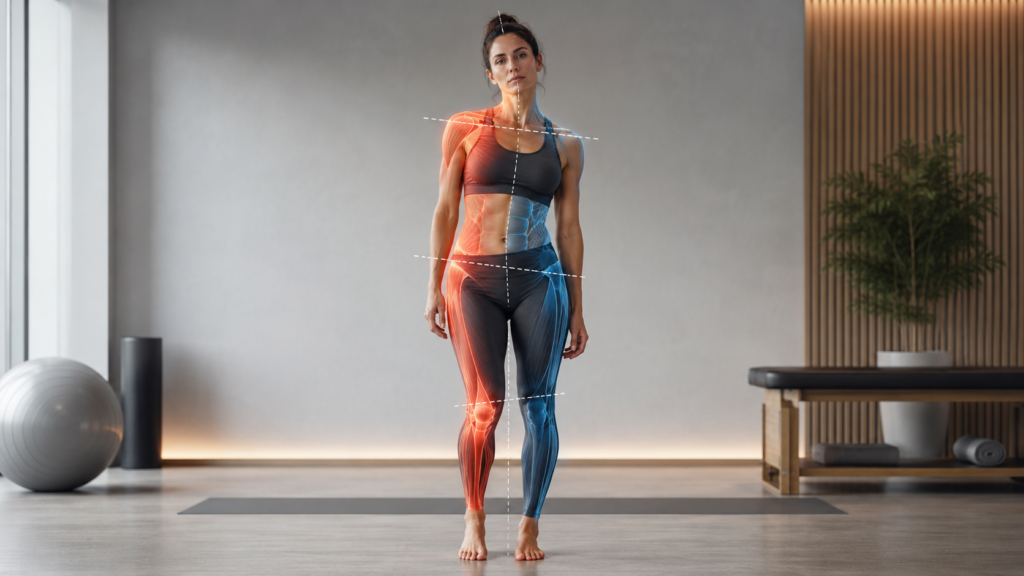
Pain is an alarm sign of the body. It tells us that something in the body needs attention. Sometimes pain comes after exercise, long sitting, lifting, sports activity, or even normal daily movement. In many people, the pain reduces for some time but keeps coming back again and again.
One common reason behind this repeated pain is muscle imbalance.
Muscle imbalance means that some regions of the body become tight, weak, overloaded, or poorly coordinated compared to other regions. When this happens, the body does not move in a balanced way. One area starts taking more pressure than it should, while another area does not support the movement properly.
Over time, this imbalance can create repeated pain in the neck, shoulder, back, hip, knee, ankle, or foot. The painful area may feel better for a few days, but if the real movement problem is not addressed, the same pain may start coming back.
What Is Muscle Imbalance?
Muscle imbalance happens when different body regions are not working together properly. The body needs strength, flexibility, posture, and coordination to move comfortably.
For example, if the upper body is stiff and the shoulder region is weak, the neck and shoulder may take extra stress. If the hip and core region are not supporting movement properly, the lower back or knee may become overloaded. If the lower leg and foot region are stiff or weak, walking, running, or standing may become uncomfortable.
This does not always start as severe pain. At first, it may feel like stiffness, heaviness, tightness, or discomfort. But when the same pattern continues every day, the body starts compensating. This compensation is one of the reasons pain keeps coming back.
Why Pain Keeps Coming Back
Many people focus only on the painful area. If the back hurts, they focus only on the back. If the knee hurts, they focus only on the knee. But the body works as one connected movement system.
Sometimes the pain is in one area, but the reason may be coming from another area.
For example:
- Neck pain may be related to upper back stiffness or shoulder imbalance.
- Lower back pain may be related to poor hip, core, or posture control.
- Knee pain may be related to hip, ankle, or walking pattern issues.
- Foot or ankle discomfort may be related to lower leg stiffness or poor movement control.
- Shoulder pain may be related to upper body posture and shoulder blade movement.
This creates a cycle:
Pain starts → Movement reduces → Muscles become weak or tight → Body compensates → Pain comes back
This is why pain relief alone may not be enough for long-term improvement. If the imbalance stays the same, the same stress may keep repeating.
Common Causes of Muscle Imbalance
Muscle imbalance usually develops slowly. It may happen because of lifestyle, work habits, training routine, previous injury, or lack of proper recovery.
1. Long Sitting Hours
Sitting for long hours may affect the neck, upper back, lower back, hip, and leg regions. The body stays in one position for too long, and some regions become stiff while others become less active.
2. Repetitive Daily Activity
Repeated bending, lifting, typing, driving, standing, or sports movement may overload certain regions of the body. When one movement is repeated again and again, imbalance may develop over time.
3. Previous Injury
After an injury, the body often changes the way it moves to avoid pain. Even after the pain reduces, that changed movement pattern may remain. This can create repeated discomfort in the same area or a nearby area.
4. Poor Posture Habits
Posture affects how the body distributes pressure. Poor sitting, standing, walking, or working posture may slowly increase stress on certain joints and muscles.
5. Unbalanced Training
Some people train strength but miss mobility. Some focus on one body region more than another. Some start intense activity after long inactivity. These patterns may increase tightness, weakness, or poor coordination.
6. Lack of Recovery
The body needs recovery between activity, work, gym, and sports. When recovery is not planned properly, muscles may stay tight, tired, or overloaded.
Signs That Muscle Imbalance May Be Involved
Muscle imbalance may show up as:
- Pain that keeps coming back in the same area
- Stiffness after sitting, standing, or training
- One side feeling tighter or weaker than the other
- Repeated neck, shoulder, back, hip, knee, or foot discomfort
- Difficulty maintaining posture
- Tiredness during movement
- Reduced flexibility
- Discomfort during daily activities
- Feeling that massage or rest gives only temporary relief
- Pain that comes back after gym, sports, or work routine
These signs do not always mean a serious condition. But they may indicate that the body needs a proper physiotherapy assessment.
Common Body Regions Affected by Muscle Imbalance
Neck and Upper Back
Long phone use, laptop work, driving, and poor posture may affect the neck and upper back region. This can lead to stiffness, heaviness, or repeated discomfort.
Shoulder Region
The shoulder may become painful when the upper body, shoulder blade region, and posture are not working together properly. This is common in gym training, desk work, racket sports, and repetitive arm activity.
Lower Back
Lower back pain may be linked with poor support from the hip, pelvis, and core region. Long sitting, lifting, bending, and poor movement habits may increase strain on the lower back.
Hip and Pelvis
The hip and pelvis region plays an important role in walking, sitting, squatting, and running. Imbalance here may affect the back, knee, or lower limb.
Knee Region
Knee discomfort may be related to movement control from the hip, thigh, ankle, and foot regions. This is why knee pain is not always only a knee problem.
Foot and Ankle
Standing for long hours, running, walking, poor footwear, or lower leg stiffness may contribute to foot and ankle discomfort.
Why General Relief May Not Be Enough
Temporary relief may reduce discomfort, but it may not correct why the pain keeps coming back.
Rest may reduce pain for a short time, but weakness and stiffness may remain. Massage may reduce tightness, but the movement pattern may stay the same. Medication may reduce symptoms, but it does not change posture, strength, or coordination.
This is why physiotherapy looks at the complete movement system.
The aim is not only to reduce pain. The aim is to understand why the body is getting overloaded and support better movement.
How Physiotherapy Helps in Muscle Imbalance
Physiotherapy helps by assessing posture, movement, flexibility, strength, balance, and daily activity patterns. Instead of focusing only on the painful area, the physiotherapist looks at how different regions of the body are working together.
A physiotherapy plan may include:
- Posture and movement assessment
- Identification of tight or weak body regions
- Mobility and flexibility support
- Strength and control improvement
- Movement correction
- Education about daily habits
- Guidance for activity, gym, sports, and work routine
- Recovery planning based on lifestyle
The treatment is planned according to the person’s condition, activity level, symptoms, and goals. Individual response may vary.
Evidence Shows Improvement
Research supports the role of structured physiotherapy and exercise-based rehabilitation in musculoskeletal pain and repeated injury patterns.
Cochrane reviews have reported that exercise therapy may improve pain and function in chronic low back pain and neck pain. NICE guidelines also recommend exercise-based care for low back pain and sciatica, with treatment selected according to the person’s needs and condition.
Sports medicine research shows that poor movement control, weakness, and imbalance can increase stress on joints and may contribute to repeated injury. Studies in shoulder, knee, and lower limb conditions also support the importance of movement assessment, strengthening, mobility, and guided rehabilitation.
This evidence supports what is commonly seen in clinical practice: when the body is assessed properly and the imbalance is addressed through structured care, many people experience gradual improvement in movement, strength, comfort, and daily function.
The PhysioVeda PPCM® Approach
At PhysioVeda Medical Centre, muscle imbalance is assessed through the PPCM® framework: PhysioVeda Posture Correction Matrix.
PPCM® focuses on:
Posture
Understanding how posture affects pressure on different body regions.
Pattern
Identifying repeated movement habits that may be contributing to pain.
Core
Supporting better control of the spine, pelvis, and full-body movement.
Movement
Improving how the body moves during daily activity, work, gym, and sports.
The PPCM® approach helps connect the painful area with the complete movement system. It focuses on root factors such as posture, muscle balance, movement habits, and body mechanics.
When to Consider Physiotherapy
You may consider physiotherapy if:
- Pain keeps coming back
- Stiffness is present again and again
- Pain increases after work, gym, or sports
- One body region always feels tight
- Movement feels restricted
- Posture feels difficult to maintain
- Pain affects walking, sitting, standing, lifting, or sleep
- You have recovered from an injury but symptoms keep coming back
If pain is associated with sudden weakness, loss of bladder or bowel control, major injury, severe swelling, fever, unexplained weight loss, or constant night pain, medical review is advised.
Why Professional Guidance Matters
Muscle imbalance is not always easy to understand on your own. The painful area may not be the only area involved. A physiotherapist can assess the body as a complete movement system and guide care according to the person’s condition.
Professional guidance may help with:
- Understanding the reason behind repeated pain
- Choosing the right level of activity
- Reducing overload patterns
- Improving movement quality
- Building better body awareness
- Supporting long-term function
Doing random exercises or only focusing on the painful area may not address the full problem. A structured plan helps make rehabilitation more specific and progressive.
Expected Outcomes
With consistent physiotherapy and proper guidance, many people may notice gradual improvement in:
- Movement comfort
- Flexibility
- Strength and control
- Posture awareness
- Daily activity tolerance
- Exercise confidence
- Reduced frequency of repeated discomfort
Results vary from person to person depending on the condition, duration of symptoms, lifestyle, consistency, and overall health.
The Bottom Line
Muscle imbalance can be a silent reason behind repeated pain. It may develop slowly through posture habits, long sitting, repeated activity, previous injury, unbalanced training, or poor recovery.
Pain may reduce for some time, but if the movement imbalance remains, the discomfort may keep coming back.
Physiotherapy helps by looking beyond the painful area. It assesses the full body movement system, identifies contributing factors, and supports better posture, muscle balance, control, and movement.
At PhysioVeda Medical Centre, our PPCM® approach is designed to support people with repeated pain, stiffness, and movement-related discomfort through structured physiotherapy care.
If your pain keeps coming back, your body may not need only temporary relief. It may need better assessment, better movement, and better guidance.
References
- Hayden JA et al. Exercise therapy for chronic low back pain. Cochrane Database of Systematic Reviews. 2021.
- National Institute for Health and Care Excellence. Low back pain and sciatica in over 16s: assessment and management. NG59.
- Gross A et al. Exercises for mechanical neck disorders. Cochrane Database of Systematic Reviews.
- Hickey D et al. Scapular dyskinesis and future shoulder pain in athletes: systematic review and meta-analysis. British Journal of Sports Medicine. 2018.
- Neal BS et al. Risk factors for patellofemoral pain: systematic review and meta-analysis. British Journal of Sports Medicine. 2019.
- Lauersen JB et al. The effectiveness of exercise interventions to reduce sports injuries: systematic review and meta-analysis. British Journal of Sports Medicine. 2014.
- World Health Organization. Rehabilitation in health systems.