

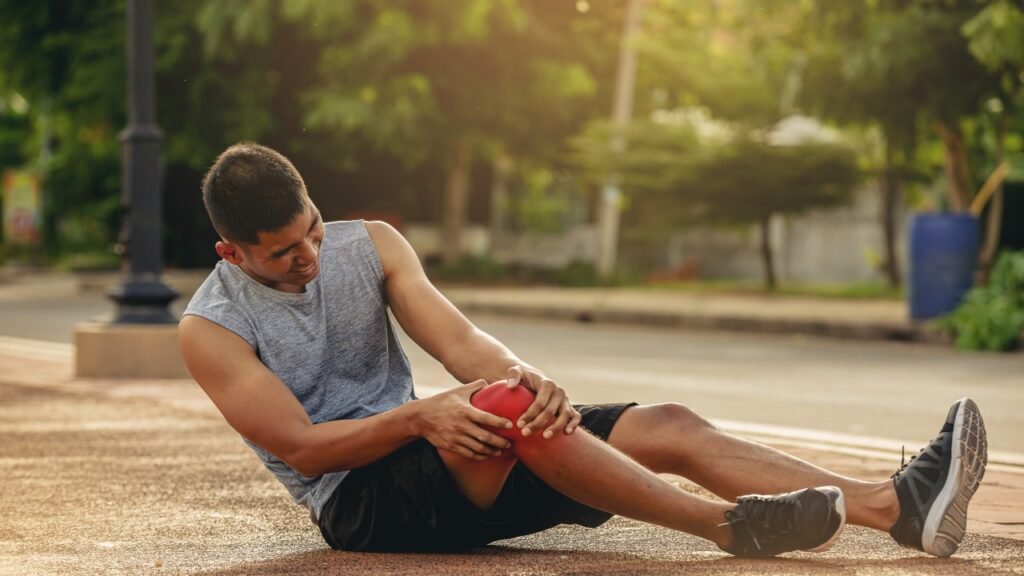
Pain is the body’s natural alarm system it signals that something needs attention, not that you are weak. Athletes frequently experience sprains, strains, and other injuries during training and competition. However, ignoring these injuries can lead to long-term problems such as chronic pain, reduced performance, and joint instability.
Physiotherapy through guided exercise, movement correction, and education is a proven and essential component of recovery. Sports medicine experts consistently highlight that structured, exercise-based rehabilitation is the cornerstone of safe and effective recovery after athletic injuries [1].
This article explains sports injuries and demonstrates how physiotherapy helps restore function, speed recovery, and prevent recurrence.
Understanding Sports Injuries
Sports injuries affect muscles, ligaments, tendons, and bones. Common examples include:
- Ankle sprains
- Muscle strains (e.g., hamstring pulls)
- Knee injuries (ACL tears)
- Shin splints
- Tendonitis (Achilles, tennis elbow)
- Stress fractures
These injuries may result from:
- Acute trauma (twisting, falls, collisions)
- Overuse (repetitive movement such as running or jumping)
Athletes often push their physical limits, increasing injury risk. Research shows ankle sprains and muscle strains are among the most common sports injuries, with ankle sprains accounting for a significant number of emergency visits [2].
Ignoring injuries or relying only on rest can lead to stiffness, weakness, and long-term joint issues. Early rehabilitation is essential to restore strength, flexibility, and coordination [1].
Signs of Sports Injury
Common symptoms include:
- Pain and swelling
- Limited range of motion
- Muscle weakness
- Joint instability (“giving way”)
- Bruising or redness
- Pain during activity that improves with rest
Red flags requiring immediate medical attention:
- Severe swelling
- Inability to bear weight
- Deformity
- Audible “pop” during injury
Persistent pain or functional limitations beyond a few days indicate the need for physiotherapy. Early intervention prevents complications such as chronic instability.
Causes of Sports Injuries
Sports injuries usually result from multiple contributing factors:
- Acute trauma: sudden force or impact
- Overuse: repetitive stress without adequate recovery
- Muscle imbalance or fatigue: poor biomechanics
- Poor technique or equipment: incorrect form or worn gear
- Lack of warm-up/flexibility: tight muscles prone to strain
- Previous injury: increased risk of recurrence
These factors often create a cycle of pain, compensation, and further injury. Physiotherapy addresses the root causes, not just symptoms.
When to Consider Physiotherapy
Physiotherapy should be considered if:
- Pain lasts more than 2–3 days
- Movement is limited or painful
- Swelling or instability is present
- Injuries recur frequently
- Post-surgical rehabilitation is required
- Returning to sport after inactivity
Evidence strongly supports early active rehabilitation over prolonged rest [1]. Early physiotherapy helps maintain mobility, reduce pain, and accelerate recovery.
How Physiotherapy Helps
Physiotherapy provides a structured and personalised rehabilitation program, including:
1. Strengthening Exercises
Target injured and surrounding muscles to restore strength and stability.
2. Mobility & Flexibility Training
Improve joint range of motion and reduce stiffness.
3. Proprioception & Balance Training
Enhance joint awareness and reduce re-injury risk.
4. Sport-Specific Rehabilitation
Gradual return to sport through functional drills.
5. Core Stability Training
Improve overall movement control and performance.
6. Manual Therapy & Recovery Techniques
Massage, joint mobilisation, taping, and modalities for pain relief.
7. Education & Prevention
Guidance on posture, technique, and training load management.
A physiotherapist supervises progress, corrects technique, and ensures safe recovery.
Benefits of Physiotherapy for Athletes
Physiotherapy offers multiple proven benefits:
- Faster return to sport
- Reduced pain and inflammation
- Improved strength and mobility
- Lower risk of re-injury
- Enhanced performance and endurance
- Improved confidence and mental well-being
Unlike passive treatments, physiotherapy actively rebuilds strength and corrects movement patterns, making recovery more effective [1].
Evidence Shows Improvement
Scientific research and expert reports strongly support the role of physiotherapy in sports injury recovery. Examples include:
• A systematic review by Filbay SR et al. titled “Evidence-Based Recommendations for the Management of Anterior Cruciate Ligament (ACL) Rupture” published in the British Journal of Sports Medicine (2016) emphasized that structured physiotherapy-led rehabilitation is essential for restoring function and enabling a safe return to sport [1].
• A review by Grindem H et al., “Simple Decision Rules Can Reduce Reinjury Risk by 84% After ACL Reconstruction” in the British Journal of Sports Medicine (2016) demonstrated that physiotherapy-based strength and neuromuscular training significantly reduce reinjury risk in athletes [2].
• A systematic review and meta-analysis by Munn J et al., “The Effect of Balance Training on Ankle Injury Prevention” published in the Journal of Science and Medicine in Sport (2010) showed that physiotherapy-guided balance and strengthening programs reduce recurrence of ankle injuries in athletic populations [3].
• A 2025 meta-analysis by Smith TO et al., “Supervised Rehabilitation Versus Home-Based Exercise in Musculoskeletal Injuries” in the Journal of Orthopaedic & Sports Physical Therapy (2025) reported that supervised physiotherapy programs lead to greater improvements in muscle strength and functional recovery compared to unsupervised home programs, particularly in athletes [4].
• The National Institute for Health and Care Excellence (NICE) guidelines titled “Rehabilitation After Traumatic Injury” (2020) and position statements from the World Health Organization (WHO, 2023) highlight that early physiotherapy and active rehabilitation are critical for restoring mobility, preventing long-term disability, and improving return-to-activity outcomes [5][6].
Taken together, this evidence confirms what athletes and clinicians observe in practice: a consistent, guided physiotherapy program leads to measurable gains in strength, function, and confidence. Ignoring injury or relying on rest alone often leads to persistent weakness and higher reinjury risk. As widely emphasized in sports rehabilitation literature, returning to sport without proper physiotherapy is one of the most significant contributors to recurring injuries.
The PhysioVeda Sports Injury Program (PPCM® Approach)
At PhysioVeda Medical Centre, we use the PPCM® framework:
Posture & Movement Assessment
Identify biomechanical issues affecting recovery.
Core Stability Training
Enhance strength and control for better performance.
Muscle Re-Patterning
Correct compensatory movement patterns.
Sport-Specific Training
Prepare athletes for safe return to competition.
This holistic approach ensures long-term recovery and improved performance.
Why Professional Guidance Matters
While general exercise helps, targeted physiotherapy is essential for optimal recovery.
A physiotherapist:
- Designs injury-specific programs
- Monitors technique and progression
- Prevents complications and re-injury
- Guides safe return to sport
Without supervision, incorrect exercise or overtraining can delay recovery. Professional guidance ensures safe and effective rehabilitation [1].
Take the First Step Towards Full Recovery
PhysioVeda Medical Centre offers:
- Expert physiotherapists with sports rehabilitation training
- Personalised, evidence-based treatment programs
- Objective progress tracking
- Supportive rehabilitation environment
Early intervention is key. Starting physiotherapy early leads to faster recovery and better outcomes.
“You deserve to play injury-free. Physiotherapy helps you return stronger, safer, and more confident.”
References
· Johnson AP et al. Effect of early supervised physiotherapy on recovery from acute ankle sprain (BMJ 2016)[4].
· Khubzan WD et al. Supervised vs Home-based Rehab after ACL reconstruction (EFORT Open Reviews 2025)[1].
· Additional sources: Sports medicine and physiotherapy association guidelines, Cochrane reviews on sports injury rehabilitation, WHO musculoskeletal injury reports.
· Filbay SR, Grindem H. Evidence-based recommendations for the management of anterior cruciate ligament (ACL) rupture. British Journal of Sports Medicine. 2016.
· Grindem H, Snyder-Mackler L, Moksnes H, et al. Simple decision rules can reduce reinjury risk by 84% after ACL reconstruction. British Journal of Sports Medicine. 2016.
· Munn J, Sullivan SJ, Schneiders AG. Evidence of sensorimotor deficits in functional ankle instability: a systematic review and meta-analysis. Journal of Science and Medicine in Sport. 2010.
· Smith TO, Davies L, Hing CB. Supervised rehabilitation versus home exercise in musculoskeletal injuries: a systematic review and meta-analysis. Journal of Orthopaedic & Sports Physical Therapy. 2025.
· National Institute for Health and Care Excellence (NICE). Rehabilitation after traumatic injury. 2020.
· World Health Organization (WHO). Rehabilitation in health systems. 2023.