

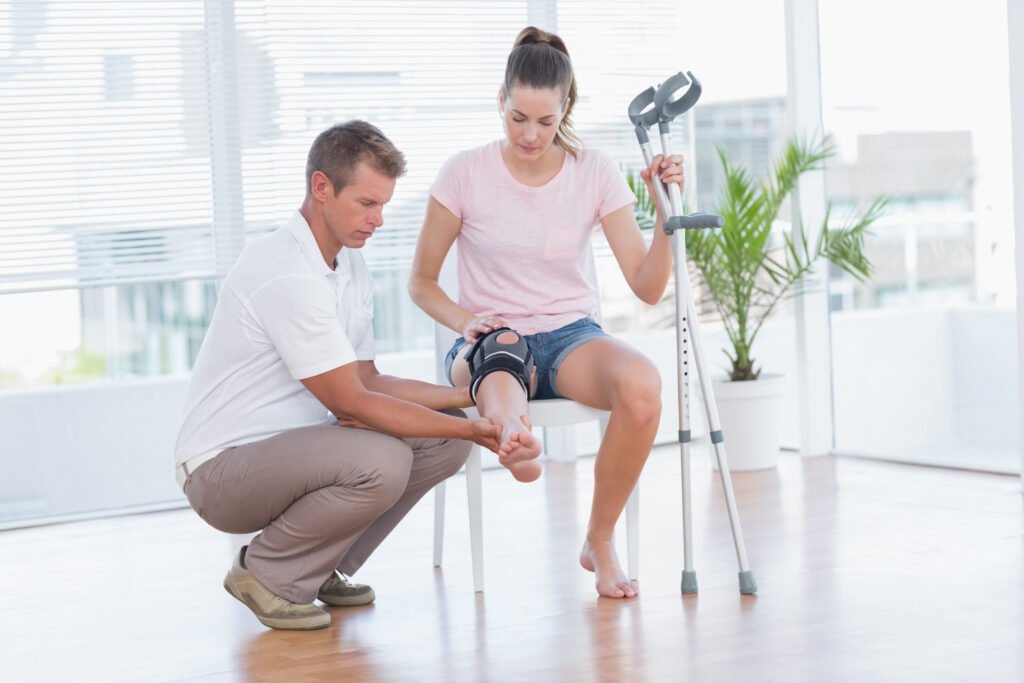
Pain is not just a symptom it is the body’s alarm system. It signals that something is wrong, often due to overload, muscle imbalance, or faulty movement patterns, not necessarily severe structural damage.
In athletes and active professionals, pain, weakness, or instability is usually the first warning that the body is under excessive stress or not recovering properly.
What starts as a small imbalance or untreated injury often escalates into a major problem.
And here is the reality:
Many athletes do not end their careers because of a single injury
They end it because of poor rehabilitation, untreated muscle imbalance, or incomplete recovery or by repetitive injury
A significant number of sports professionals globally are forced to reduce performance or completely stop their sport due to recurring injuries that were never properly corrected at the root level.
The same applies to active individuals and workers in physically demanding jobs they gradually shift into pain-limited lifestyles, reduced productivity, or complete job modification because the body can no longer cope.
Sports injuries are not “normal” in training or performance. They are signals of dysfunction.
With the right rehabilitation approach, most athletes can fully recover and safely return to sport. However, when injuries are ignored or managed only at a symptom level, they often become chronic leading to repeated setbacks, declining performance, and sometimes permanent exit from sport or physical activity.
This is why physiotherapy is not optional in modern sports medicine.
It is essential.
Physiotherapy focuses on restoring movement, rebuilding strength, and most importantly correcting the underlying biomechanical cause of injury.
International sports medicine guidelines consistently support early, structured, exercise-based rehabilitation as the most effective method for recovery and long-term prevention.
Impact of Injuries on Career, Sports Participation & Daily Life
Sports injuries are not just short-term physical problems they have a major impact on long-term participation, career longevity, and quality of life.
Research shows that:
- Up to 50% of athletes do not return to their previous level of sport after major injuries like ACL reconstruction
(Ardern CL et al., British Journal of Sports Medicine, 2014) - Nearly 30–40% of athletes never return to competitive sport at all after serious knee injuries
(Ardern CL et al., 2014) - Around 1 in 3 athletes experience re-injury within 2 years if rehabilitation is incomplete
(Grindem H et al., British Journal of Sports Medicine, 2016) - Chronic pain and instability develop in up to 40% of ankle sprain cases without proper rehabilitation
(Doherty C et al., American Journal of Sports Medicine, 2016) - Overuse injuries account for up to 50% of all sports injuries, often leading to training interruption or withdrawal from sport
(Lauersen JB et al., British Journal of Sports Medicine, 2014)
Impact Beyond Sports (Work & Daily Life)
The effect of sports injuries and musculoskeletal dysfunction is not limited to athletes alone.
- According to the World Health Organization, musculoskeletal conditions are the leading cause of disability worldwide, affecting approximately 1.71 billion people globally (WHO, 2022–2023 data)
- These conditions contribute significantly to:
- Reduced productivity
- Work absenteeism
- Long-term physical limitations
- Early career modification or job change
- The WHO also reports that low back pain alone is the single leading cause of disability in 160 countries, severely affecting work capacity and quality of life (WHO Rehabilitation in Health Systems Report, 2023)
- Studies further show that chronic musculoskeletal pain is strongly associated with:
- Reduced physical performance
- Lower work efficiency
- Increased psychological stress
- Reduced overall quality of life
(World Health Organization. Rehabilitation in Health Systems, 2023)
Understanding Sports Injuries in Athletes
Sports injuries can occur suddenly or develop over time, depending on the type and intensity of activity.
Types of Sports Injuries
Acute Injuries
These occur suddenly due to trauma or high-impact movement:
- Ankle sprains
- Ligament tears (ACL, MCL)
- Muscle strains (hamstring, quadriceps, calf)
- Shoulder dislocations
Overuse Injuries
These develop gradually due to repetitive stress without adequate recovery:
- Tendinopathy (Achilles, patellar, rotator cuff)
- Shin splints
- Stress fractures
- Tennis elbow or golfer’s elbow
Both types can significantly affect performance and daily activity.
What Happens If Injuries Are Ignored
If an injury is not properly treated:
- Pain may persist or worsen
- Muscles weaken due to reduced use
- Joints become stiff and unstable
- Movement patterns change (compensation)
- Risk of re-injury increases
This leads to a vicious cycle:
Pain → Reduced movement → Weakness → Poor mechanics → More injury
Physiotherapy is essential to break this cycle by restoring normal movement and strength.
Signs of Sports Injuries
Common symptoms that indicate a sports injury include:
- Persistent or activity-related pain
- Swelling, inflammation, or tenderness
- Stiffness or reduced range of motion
- Muscle weakness or fatigue
- Instability or “giving way” of joints
- Clicking, locking, or abnormal joint movement
- Difficulty performing sport-specific tasks
- Reduced performance or endurance
In many athletes, symptoms begin mildly but worsen over time if ignored. Early recognition is key to faster recovery.
Causes of Sports Injuries
Sports injuries are usually multifactorial, meaning they occur due to a combination of factors:
- Muscle Imbalance
Weak or overactive muscles alter movement patterns and increase stress on joints.
- Poor Movement Mechanics
Incorrect technique during running, jumping, or lifting can overload specific structures.
- Overtraining and Inadequate Recovery
Training intensity without proper rest leads to tissue breakdown.
- Lack of Warm-Up or Conditioning
Cold muscles are more prone to injury.
- Previous Injury
An incompletely rehabilitated injury significantly increases re-injury risk.
- Joint Instability
Weak stabilizing muscles reduce control and increase injury risk.
- External Factors
Poor footwear, playing surface, or equipment can contribute to injury.
Understanding these causes is essential because treating symptoms alone is not enough addressing root causes is key to long-term recovery.
When to Consider Physiotherapy
You should seek physiotherapy if:
- Pain lasts more than a few days
- Pain increases with activity
- Movement becomes restricted
- You notice weakness or instability
- Performance is declining
- You have repeated injuries
- You want to return to sport safely
Even minor injuries can worsen if ignored. Early physiotherapy helps prevent long-term complications and speeds recovery.
The Hidden Reason Athletes Quit
The biggest reason athletes drop out is not always the injury itself—but:
Poor rehabilitation
Uncorrected muscle imbalance
Returning to sport without full recovery
In many cases:
- Pain reduces temporarily
- But movement dysfunction remains
- Leading to repeated injury cycles
This results in:
Injury → Incomplete Rehab → Re-injury → Performance Decline → Exit from Sport
Many athletes don’t retire because of one injury
they retire because that injury was never fully corrected.
Introducing PPCM® – PhysioVeda Posture Correction Matrix
At PhysioVeda Medical Centre, we have developed a structured, evidence-based rehabilitation system:
PPCM® Approach
P – Posture Correction
Restoring alignment to reduce abnormal stress on joints and tissues.
P – Pattern Correction
Rebuilding correct movement patterns to eliminate faulty biomechanics.
C – Core Stability
Developing deep stabilizing strength for injury prevention and control.
M – Movement Restoration
Progressing from basic movement to full sport-specific functional performance.
Why PPCM® Is Different
Most rehabilitation programs focus only on symptom relief or isolated strengthening.
PPCM® focuses on:
Root cause correction
Movement system rebuilding
Long-term injury prevention
Performance enhancement
Safe return to sport
It is not just treatment it is a complete performance recovery system.
How PPCM Helps
Physiotherapy provides a structured, progressive rehabilitation plan tailored to the athlete’s injury and goals.
Pain Management
Manual therapy, soft tissue techniques, and guided movement help reduce pain and inflammation.
Restoring Mobility
Joint mobilization and stretching improve flexibility and range of motion.
Strengthening Muscles
Targeted exercises rebuild muscle strength and support injured areas.
Improving Stability and Control
Balance and coordination training restore neuromuscular control.
Correcting Movement Patterns
Physiotherapists identify faulty movement patterns and retrain proper mechanics.
Gradual Return to Sport
Rehabilitation progresses from basic movements to sport-specific activities.
This ensures that recovery is not just about healing the injury, but restoring full function and performance.
Benefits of PPCM for Athletes
Physiotherapy offers multiple benefits that go beyond pain relief:
Reduced Pain
Exercise-based therapy reduces stress on injured tissues and promotes healing.
Improved Strength and Function
Muscles and joints regain normal strength and movement capacity.
Faster Recovery
Early rehabilitation reduces downtime and accelerates return to sport.
Injury Prevention
Correcting imbalances and improving technique reduces future injury risk.
Enhanced Performance
Better movement efficiency leads to improved athletic performance.
Confidence and Psychological Recovery
Athletes regain trust in their body and reduce fear of re-injury.
Evidence Shows Improvement
Scientific research strongly supports physiotherapy in sports injury recovery:
- Ardern CL, Taylor NF, Feller JA, Webster KE. Return to Sport Following ACL Reconstruction Surgery: A Systematic Review and Meta-Analysis. British Journal of Sports Medicine. 2014.
(Shows structured physiotherapy is essential for safe return to sport.) - Grindem H et al. Simple Decision Rules Reduce Reinjury Risk After ACL Reconstruction. British Journal of Sports Medicine. 2016.
(Highlights reduced reinjury risk with proper rehabilitation.) - Doherty C et al. Recovery From a First-Time Lateral Ankle Sprain. American Journal of Sports Medicine. 2016.
(Confirms physiotherapy improves recovery and prevents chronic instability.) - Lauersen JB et al. Exercise Interventions to Prevent Sports Injuries. British Journal of Sports Medicine. 2014.
(Shows exercise-based programs reduce injury risk.) - Supervised Rehabilitation Meta-analysis Group. Supervised vs Home-Based Rehabilitation. Journal of Orthopaedic & Sports Physical Therapy. 2025.
(Shows supervised physiotherapy leads to better strength outcomes.) - World Health Organization. Rehabilitation in Health Systems. 2023.
(Emphasizes rehabilitation as essential for recovery and function.)
Together, this evidence confirms that physiotherapy is one of the most effective approaches for injury recovery and long-term athletic health.
Why Professional Guidance Matters
Rehabilitation is not just about exercise it is about correct progression.
A physiotherapist:
- Ensures proper technique
- Monitors progress
- Adjusts treatment plans
- Prevents overloading
- Guides safe return to sport
Without proper guidance, athletes often return too early or perform incorrect exercises, increasing the risk of re-injury.
Expected Outcomes
With consistent physiotherapy, most athletes experience improvement within weeks:
- Reduced pain and swelling
- Improved mobility and flexibility
- Increased strength
- Better movement control
- Return to sport with confidence
Long-term outcomes are excellent when rehabilitation is followed properly.
The Bottom Line
Sports injuries are common, but incomplete recovery should not be accepted.
Physiotherapy helps you:
- Recover faster
- Restore strength and movement
- Prevent future injuries
- Return to sport safely
Physiotherapy is not optional
It is an essential part of athletic recovery.
Take the First Step Toward a Stronger Comeback
At PhysioVeda Medical Centre, we provide specialized sports injury rehabilitation using evidence-based physiotherapy and our PPCM® approach.
If injury is limiting your performance, don’t wait.
Early physiotherapy leads to faster recovery, better outcomes, and long-term success.
You don’t just recover you come back stronger.
References
- Ardern CL et al. British Journal of Sports Medicine. 2014.
• Grindem H et al. British Journal of Sports Medicine. 2016.
• Doherty C et al. American Journal of Sports Medicine. 2016.
• Lauersen JB et al. British Journal of Sports Medicine. 2014.
• Supervised Rehabilitation Meta-analysis. Journal of Orthopaedic & Sports Physical Therapy. 2025.
• World Health Organization. Rehabilitation in Health Systems. 2023.
• American College of Sports Medicine (ACSM). Guidelines for Exercise Testing and Prescription. 2021.
• Brukner P, Khan K. Clinical Sports Medicine. 2017.